I have shared new versions of the male catsuit pattern, and a number of other patterns that are derived from this:
Leggings – without feet
Leggings – with feet (tights)
Catsuit – no feet – back zip
Catsuit – with feet
Shorty catsuit – short legs, short sleeves
Super hero catsuit
Shorts – cycle shorts, boxer shorts,
Socks
All these patterns are derived from my male catsuit pattern. Because of this, there are some seemingly bizarre measurement requirements, for instance, the sock pattern asks for neck_back_to_waist_b! This is because the position of the sock pattern pieces, relative to the page and to each other are controlled by the core body measurements, because the sock pattern is just a heavily cut-down catsuit pattern.
Many of these patterns allow you to adjust parameters that control the position of the waist band, length of shorts or socks etc.. The negative ease and seam overlap can also be adjusted.
All of the patterns that involve the torso are very sensitive to inaccurate measurements. This is because key points are defined by the intersection of dependent measurements. These rely on the need for consistency in points that are used by multiple measurements. It is very hard to take measurements yourself, as twisting your torso or moving your arms can affect the measurements enough to cause the intersections to be incorrect.
I have published subsets of the male catsuit pattern for shorts (including boxer briefs, and cycle shorts), and leggings. These use the same measurement system as the catsuit pattern and should be a good way to resolve measurement issues, focussing on specific parts of the pattern.
my-pattern.cloud now supports variations for patterns. Where defined, these can currently be found on the ‘Pieces’ tab though they may soon have their own tab. These allow multiple pattern variations to be supported by one pattern, with customisations of variables.
If there is an interest, I will also publish variations for t-shirt, leggings-with-feet and socks. Please send me a comment if this would be useful.
Version 6 of my men’s catsuit pattern is now available.
This version adds optional socks. There is a variable #adaptAnkleForIntegratedSock which can be set to 0 or 1 and controls whether the ankle hem is transformed to attach feet. There is an additional sock top and sock sole pattern piece.
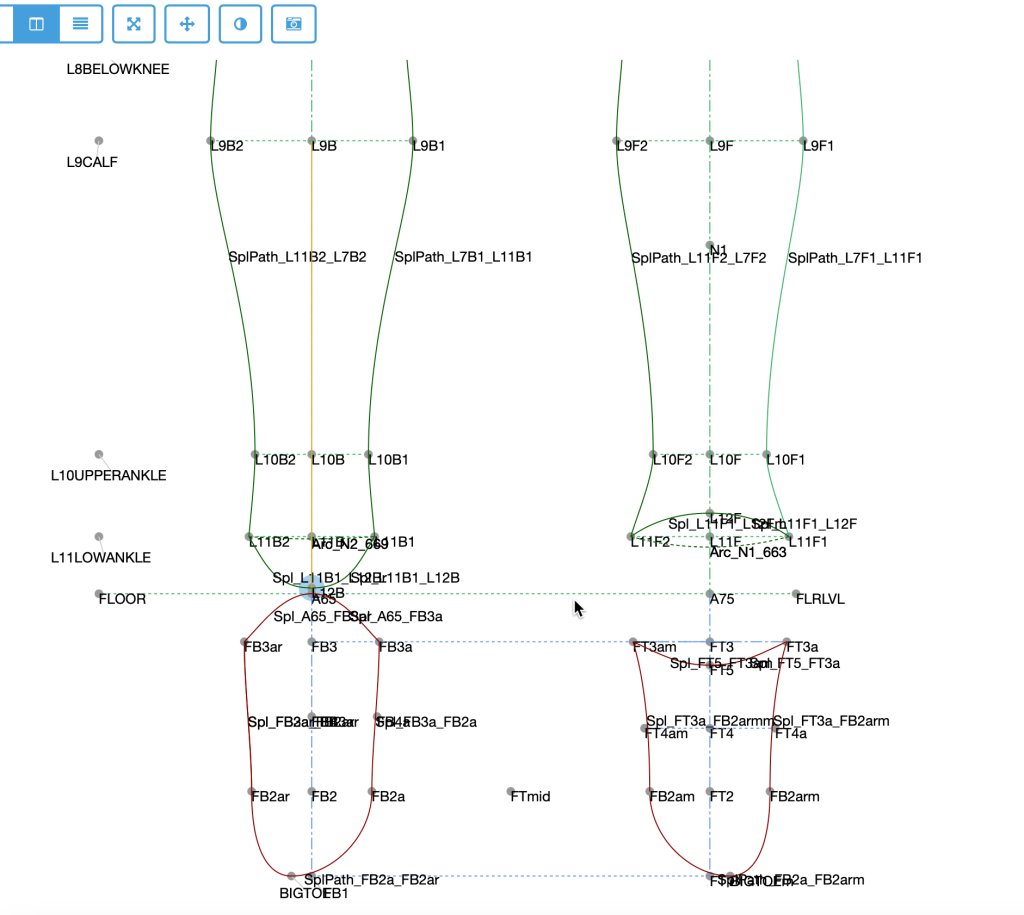
This versions also uses groups to hide the majority of drawing objects by default to make the basic geometry clearer.
As with previous versions, the geometry is entirely driven by measurements, and these must be taken carefully and consistently. If the pattern doesn’t work then please check your measurements, and then drop me a message.
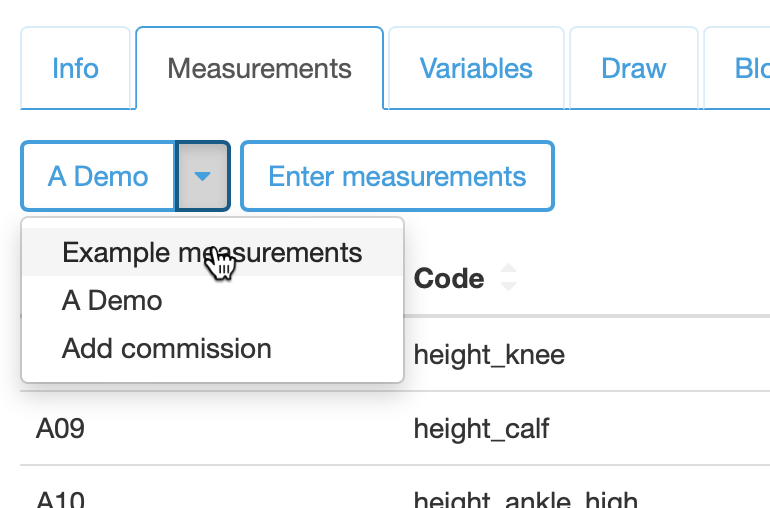
You can easily compare how the pattern looks with your measurements compared to the example.
Scroll up/down on the pattern drawing to zoom out/in, and click and drag to pan.
This version also fixes an issue with the alignment notches on the back armscye.
Quick update on the catsuit/stockings patterns. I’ve updated my-pattern.cloud so that when you use a shared pattern you can now override key variables that drive the pattern, e.g. seam-allowance.
There are now instructions for entering your measurements for the catsuit pattern and exporting as PDF or SVG.
I hope to create some instructions soon to cover checking the pattern and adding gluing instructions.
This pattern is in beta test! It has only been used with my measurements. Please let me know if you would like me to check the resulting pattern before proceeding to use it.
Note: this pattern is currently in BETA! It needs to be tested with other people’s measurements in order to tweak some of the bezier curves. You are welcome to be a beta tester!
See Catsuit measurements guide for taking the required measurements. Please double check all measurements.
Finally progressed my measurements-driven catsuit pattern to the point where I’m happy with the results. This has been slowly refined through a number of iterations, whilst simultaneously improving the pattern sharing site.
Hopefully the pattern will work for other people’s measurements too, provided the body shape isn’t too dissimilar. There are a number of bezier control points in the pattern that may need some refinement to work nicely with other’s measurements, so it would be useful to get some example sets of measurements.
There are quite a few body measurements required, and they need to be taken very precisely. My next task is to write up some guidance for taking the measurements.




 mr doo's latex primer